
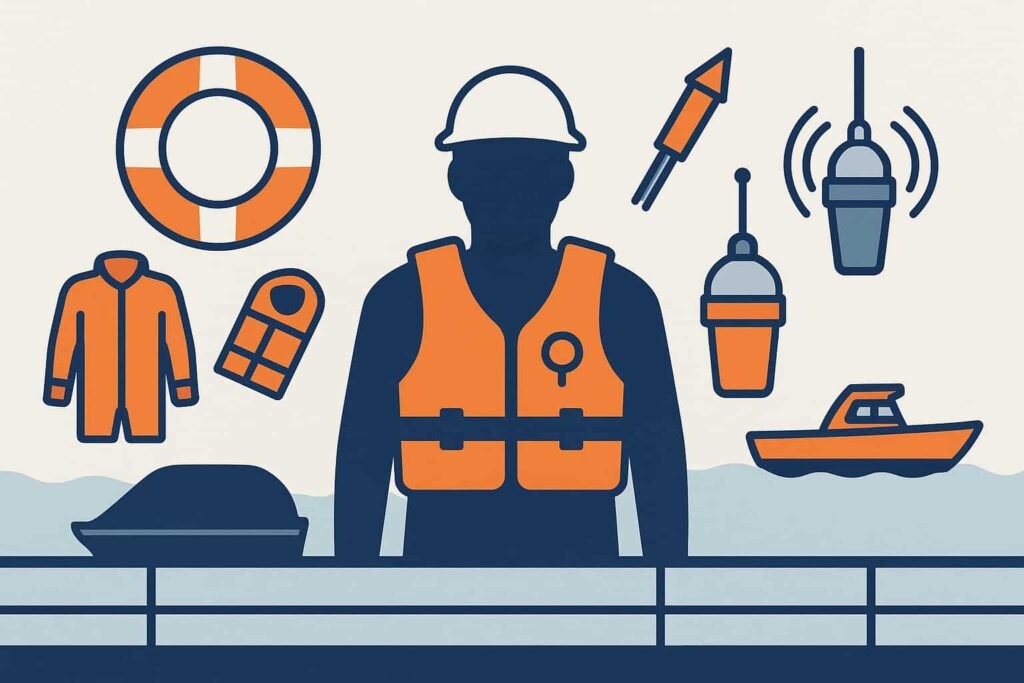
A marine life jacket stands out on a silhouetted seafarer wearing a safety helmet, surrounded by essential maritime safety gear — including a life buoy, immersion suit, liferaft, distress flare, EPIRBs, and a rescue boat — symbolizing full preparedness for emergencies at sea.
In this guide you’ll learn:
- The core types of LSA required on board.
- How maritime safety rules define inspection intervals.
- How to keep equipment ready for PSC or RightShip audits.
- The importance of working with accredited safety gear suppliers for servicing and replacement.
>> Download Now: [Free Lifejacket Inspection and Maintenance Checklist (PDF)]
The Role of Life-Saving Appliances in Ship Safety Equipment
Life-saving appliances are the heart of your vessel’s ship safety equipment. They complement maritime fire safety systems and maritime PPE, ensuring that even if prevention fails, the crew still has a fighting chance to survive.
SOLAS Chapter III and MARINA regulations specify what must be carried, how it’s maintained, and how crews should be trained. Properly maintained LSA reduce PSC deficiencies, protect lives, and demonstrate management commitment to safety.
Types of Life-Saving Appliances (LSA) Onboard Ships
1. Marine Life Jackets and Immersion Suits
Each crew member must have a properly fitted marine life jacket equipped with a light and whistle. Additional jackets are stored in wheelhouse and engine control room.
- Life jackets must be inspected quarterly for buoyancy, strap integrity, and battery life.
- Immersion suits provide thermal protection and must be vacuum-sealed and pressure-tested annually.
- Replace damaged or expired gear through certified safety gear suppliers.
2. Rescue Boats and Lifeboats
Marine rescue equipment includes enclosed lifeboats, fast-rescue craft, and launching appliances.
- Weekly checks: inspect engine oil, fuel, and hook release.
- Monthly drills: lower and start engines under load.
- Annual servicing: carried out by manufacturer-approved technicians.
Maritime safety rules (SOLAS III Reg. 20) require each lifeboat to be launched at least every three months.
3. Life Rafts and Inflation Systems
Inflatable life rafts are critical survival assets.
- Launching arrangements must be tested monthly.
- Rafts undergo annual service at shore-based stations.
- Ensure hydrostatic release units (HRU) are within expiry.
Include these details in your vessel’s safety equipment log to prove full readiness.
4. Emergency Signals and Survival Equipment
When abandoning ship, communication and visibility are key.
Essential marine safety gear includes:
- EPIRB: checked monthly; battery replaced every five years.
- SART: function-tested monthly.
- Rocket parachute flares: replaced before expiry.
- Line-throwers and mirrors: checked during every dril
Maritime Safety Rules and Inspection Intervals
| Equipment | Inspection Frequency | Responsible Officer | Record Form |
| Life Jackets | Quarterly | Safety Officer | LSA Log |
| Rescue Boat | Weekly / Monthly | Chief Officer | Boat Checklist |
| EPIRB / SART | Monthly | ETO / Deck Officer | GMDSS Log |
| Life Raft | Annual | Chief Officer / Master | Shore Service Certificate |
All inspections must be documented under the vessel’s SMS in compliance with ISM 10.2.
Crew Training and Emergency Drills
LSA are useless without trained personnel. Under maritime safety rules, crews must:
- Conduct abandon-ship drills monthly.
- Wear maritime PPE such as gloves and helmets during practice.
- Test lifeboat release mechanisms under supervision.
- Record every drill date and result in the Safety Log.
Inspection, Maintenance, and Servicing
- Keep maintenance logs for each LSA item.
- Tag inspected equipment with color-coded labels.
- Store marine life jackets and suits in dry, ventilated lockers.
- Service lifeboats and rafts only at accredited safety gear suppliers certified by MARINA or class societies.
- Retain calibration and service certificates onboard for verification.
>> Cross-reference: [Safety Gear Suppliers in the Philippines]
Common Audit Deficiencies Related to Life-Saving Appliances
Auditors frequently record:
- Expired or unserviced rafts and HRUs.
- Missing light or whistle on life jackets.
- Non-functional rescue boat engines.
- Outdated pyrotechnics or missing service certificates.
- Crew unable to demonstrate launching procedure.
Prevention Tip: Combine regular maintenance with verified supplier support and quarterly safety drills.